

Achieving Facial Harmony and Airway Improvement with Rhinoplasty
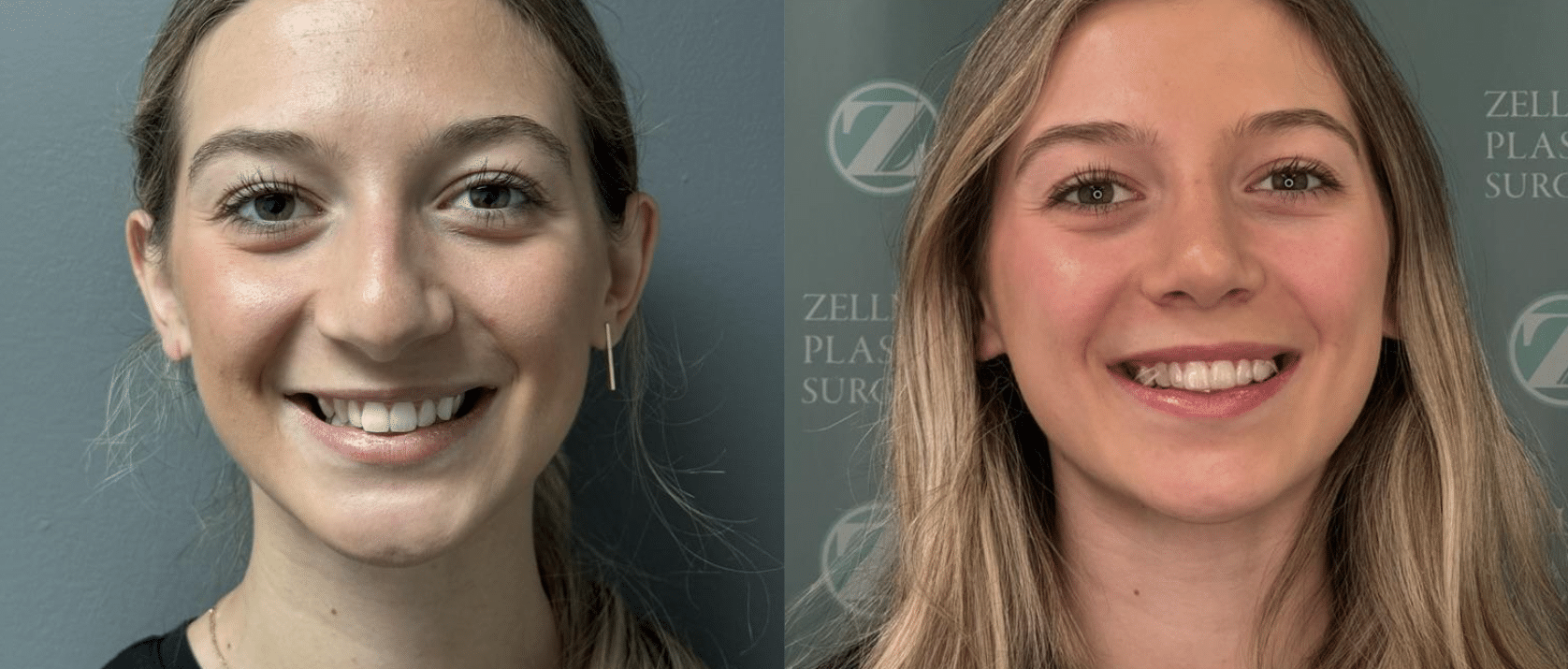
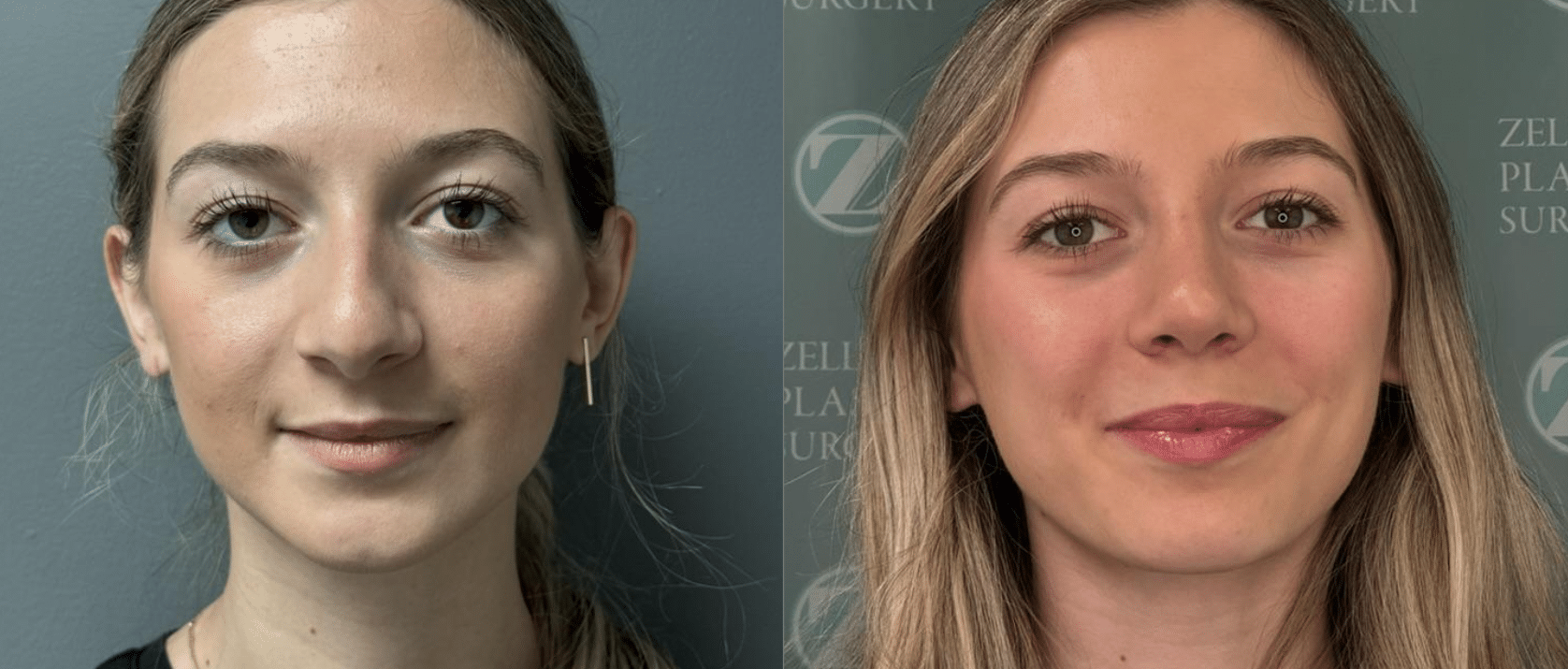
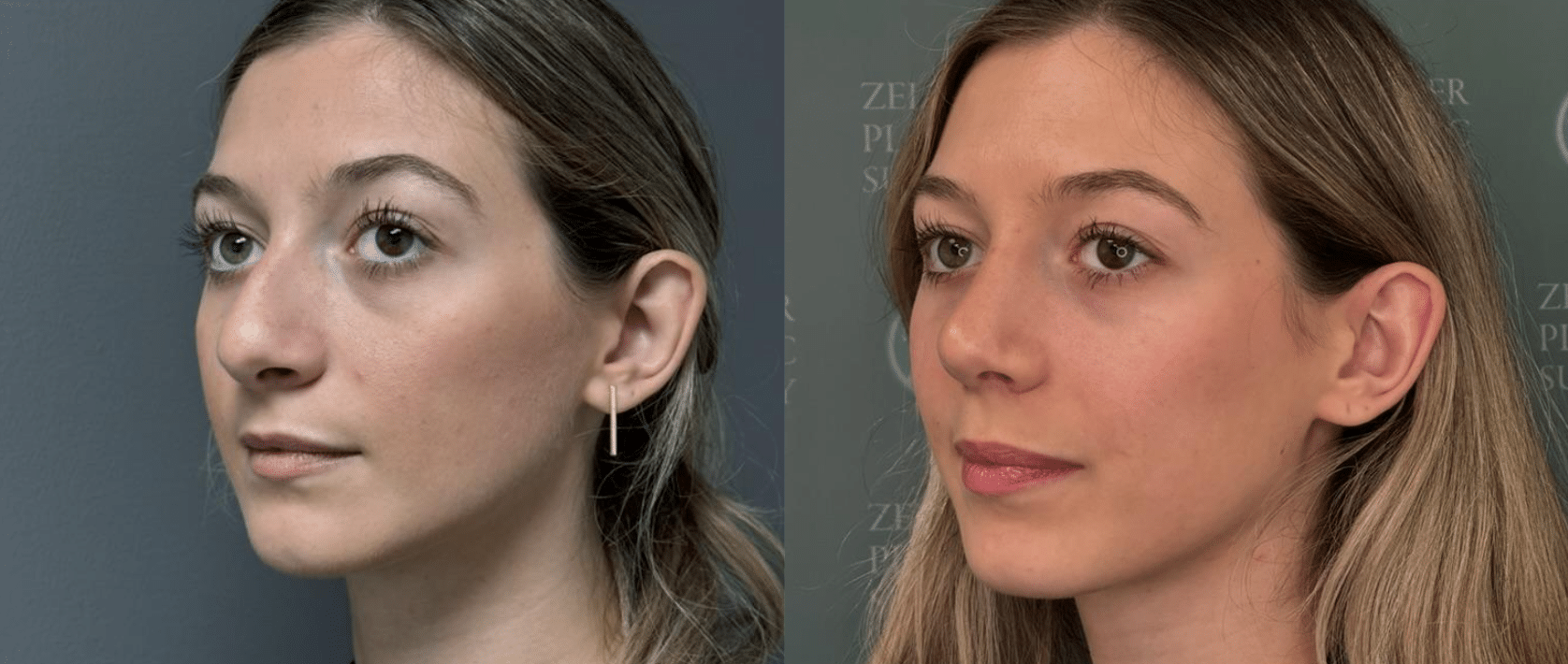
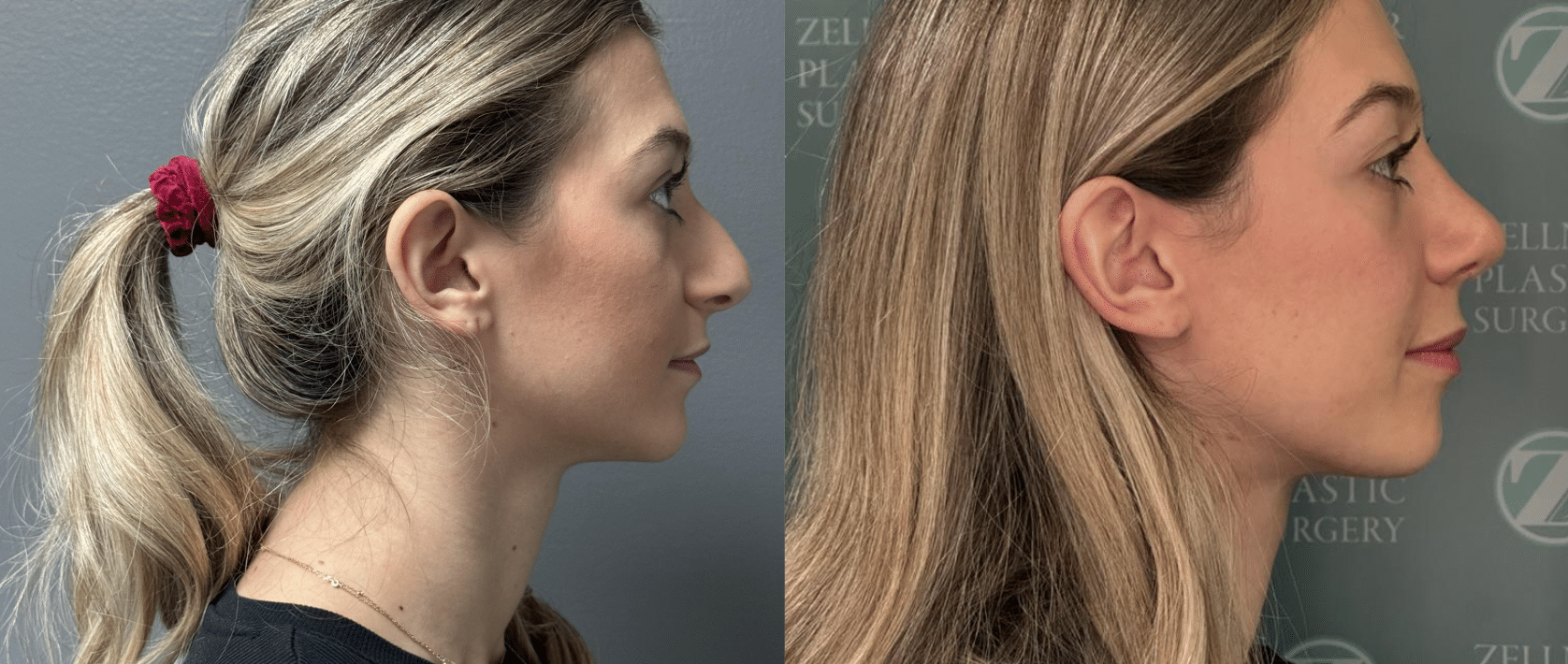
While many patients seek a rhinoplasty (nose job) primarily for cosmetic reasons, the intricate anatomy of the nose means that form and function are deeply connected. In this case, a patient came to Dr. Zellner in White Plains seeking profile refinement and left with noticeably improved breathing as well.
Patient Concerns
This patient was primarily motivated by appearance, having inherited her nasal shape from her mother and grandmother, both of whom had also had rhinoplasties. A thorough examination identified four key concerns:
- Dorsal Hump: A prominent bump on the bridge of the nose.
- Drooping Tip: A hanging, under-supported nasal tip.
- Narrow Mid-Vault: The middle section of the nose was excessively narrow, creating a pinched look and a shadow often referred to as a “parenthesis sign.”
- Airway Resistance: The pinched mid-vault was compromising the internal nasal valve, an area responsible for about 50% of the nose’s airway resistance.
During consultation, we evaluate both the visible contour of the nose and the internal structures that influence breathing. For patients considering other facial refinements, related procedures such as facelift surgery or (blepharoplasty) eyelid surgery may be discussed only when they are appropriate to the patient’s anatomy, goals, and timing.
Surgical Goals and Planning
The primary goal was a smoother, more harmonious profile that fit her face naturally. Planning centered on proportion and balance, not simply making the nose smaller. The surgical plan included:
- Reducing the excessive dorsal height to eliminate the hump.
- Reconstructing the mid-vault to eliminate the pinched shadow and restore smooth lines.
- Lifting and providing long-term support to the drooping nasal tip.
How the Rhinoplasty (Nose Job) Was Performed
To address both the cosmetic narrowing and the internal airway restriction, Dr. Zellner utilized an advanced reconstructive approach that repurposed existing cartilage rather than discarding it:
- Cartilage Repurposing: Instead of simply discarding the cartilage removed to reduce the dorsal hump, Dr. Zellner separated the upper lateral cartilages from the cartilaginous septum.
- Internal Valve Stenting: The excess dorsal cartilage was carefully flipped inward to act as a “doorstop,” physically opening up the collapsed internal nasal valve.
- Strategic Widening: While patients often expect rhinoplasty to make every part of the nose smaller, this technique actually widens the mid-vault slightly. Making the middle wider while narrowing the tip produces a smoother, more harmonious contour that catches the light cleanly, without the tucked-in shadows.
Results: Profile, Harmony, and Breathing
The results of this procedure demonstrate how anatomical form and function support each other:
- Striking Profile: The dorsal hump is gone, and the tip is beautifully supported, creating a balanced and smooth profile.
- Facial Harmony: The refined nasal contour allows her eyes to stand out more naturally and fits her overall facial proportions.
- Vastly Improved Breathing: Although she originally sought surgery for cosmetic reasons, opening the internal nasal valve completely transformed her breathing. Post-surgery, she reported being able to smell much better and breathe far more easily.
Before-and-after photos can help patients understand the type of refinement that may be possible, but each case is individual. Our rhinoplasty before-and-after gallery is best used as a starting point for conversation, not as a guarantee of a specific result.
Schedule a Consultation in White Plains, NY
If this case resonates with you, whether you’re considering rhinoplasty for cosmetic reasons, breathing concerns, or both, we invite you to schedule a consultation with Dr. Elizabeth Zellner. As a board-certified plastic surgeon practicing in White Plains, she creates individualized surgical plans focused on natural-looking results and lasting outcomes. Call us at (914) 428-4700 or request an appointment online to get started.
Frequently Asked Questions About This Rhinoplasty Case Study
Why did Dr. Zellner widen part of the nose during surgery?
A smoother, more balanced result sometimes requires support and strategic widening rather than simply making every part smaller. In this case, widening the mid-vault helped reduce the pinched look and open the airway.
Does every rhinoplasty patient need internal valve support?
No. The surgical plan depends on the patient’s anatomy, breathing, goals, and exam findings. Internal valve support is considered when the structure of the nose contributes to airflow restriction.
How long is the recovery from rhinoplasty?
Most patients return to light activity within one to two weeks. Swelling resolves gradually over several months, with final results becoming fully visible as the tissues settle. Dr. Zellner will walk you through realistic expectations during your consultation.
Am I a good candidate for rhinoplasty?
Good candidates are adults in generally good health who have specific aesthetic or functional concerns with their nose. The best way to determine candidacy is a direct evaluation. You can learn about what to expect at a rhinoplasty consultation in White Plains on our procedure page.
What other facial procedures can complement rhinoplasty?
Depending on your goals, procedures such as eyelid surgery or a facelift may be discussed to address the face more comprehensively. Dr. Zellner will recommend complementary options only when they are genuinely appropriate for your anatomy and goals.
Does insurance cover rhinoplasty?
Cosmetic rhinoplasty is typically not covered by insurance. However, if a functional issue such as a deviated septum is also being corrected, the medical portion of the procedure may be partially reimbursable depending on your coverage and treatment history. Learn more about costs and financing options at our practice.